How I Work: the method behind every pick on this site
This page explains how this independent guide reads a pet-care decision, what it compares, and what it will not do. It is written for a Miami pet owner who wants the reasoning behind a recommendation before acting on it.
A recommendation on this site is only as good as the reasoning under it, so I want to show that reasoning before asking you to rely on any of it. I am an independent guide. I am not a walker, a sitter, a groomer, a trainer or a vet, and nothing here is clinical advice. What I do is read the public rules and price guides that bear on a decision, check what they actually say, and set the result out so you can test it yourself.
I would rather you disagree with my reasoning than take my conclusion on trust.
That sentence is the whole method in one line. Every page on this site makes a claim, names the source behind it, and says which part of the claim that source does not cover.
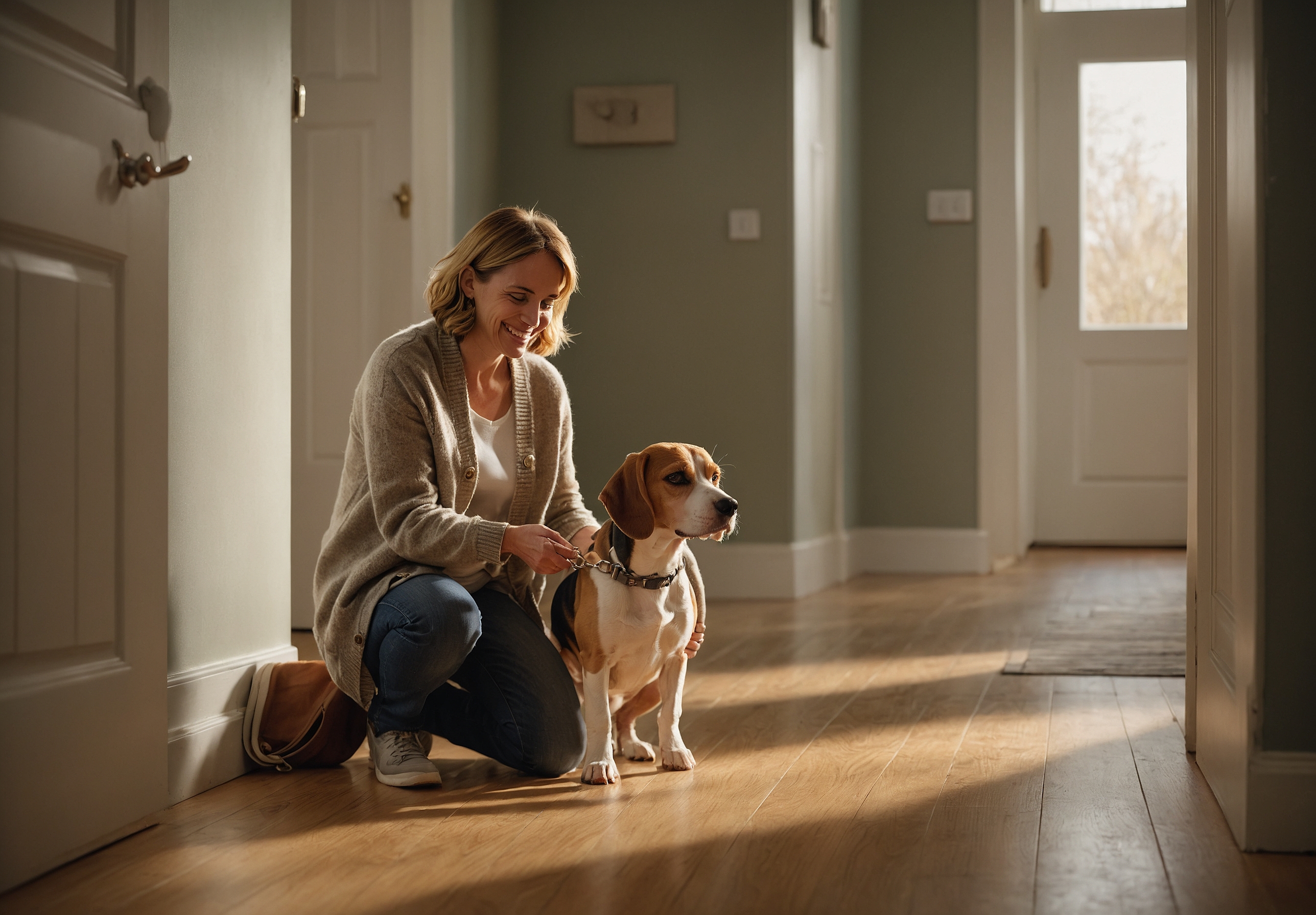
Start with the animal, then the week
Most of the decisions this site covers begin with a question about the pet rather than the provider: how old it is, how long it will be alone, whether it needs medication, and how it behaves with strangers and other dogs. I put those answers first because they decide which arrangements are possible at all.
Only then do I look at the week. A dog that needs a walk at midday is a different job from a cat that needs two visits a day, and three nights away is a different job from three weeks. The homeowner in the photograph is doing a small version of a routine that any provider has to repeat reliably and be able to describe.
Four checks every claim has to pass
The source is named
Each figure or rule carries the body that published it and, where I use it, a link to the page it was read from.
The date travels with it
Price guides change every year, so the date of the page sits next to the number. Where I could only open an older copy of a county code, I say so rather than presenting it as current.
A range stays a range
When a source gives a span, I print the span. A single number would suggest a precision the source does not claim.
A gap is said out loud
When a source does not cover Miami, or does not cover a type of provider, the page says so instead of filling the space with a guess about the local market.
Four numbers I will stand behind
These figures come from published sources rather than from me. Each one names where it comes from, and the link leads to the page it was read from.
- 4 months
- The age from which Florida law requires every dog, cat and ferret to be vaccinated against rabies. The statute is Florida Statutes, Section 828.30 (2025).
- 12 months
- The booster interval the same statute sets after the first rabies shot, after which the vaccine maker’s directions apply. Source: Florida Statutes, Section 828.30 (2025).
- 10 seconds
- The hand test the American Kennel Club gives for pavement before a walk: if you cannot keep your hand on it for ten seconds, it is too hot for a dog’s paws.
- 8 to 12 hours
- How long PetMD says a healthy adult cat can generally be left alone at a time. The same page says to arrange a sitter once you will be away more than 24 hours.

Group settings raise a different question
A daycare or group walk puts several dogs in one space, so the question moves from how one dog behaves to how the group behaves. Before looking at any group arrangement, write down the dog’s history with other dogs and ask the provider how a dog that does not get on with others is kept apart.
Vaccination belongs in the same conversation. The ASPCA treats the Bordetella (kennel cough) vaccine as non-core, given according to a dog’s exposure risk, so whether a facility asks for it is that facility’s own rule and worth asking about. Canine influenza runs on a different timetable: a University of Florida page from the 2023 outbreak says two doses are required and protection takes at least four weeks to develop.

Where doing it yourself stops making sense
A short walk for a healthy dog is a task most owners can keep for themselves. The American Kennel Club says there is no fixed walk length: a dog that is out of shape can start with a 10 to 15 minute walk, and a 10-week-old puppy suits a 10-minute walk two or three times a day. Those are starting points, and they are why a provider should ask about age and fitness before naming a time.
Doing it yourself stops making sense once the schedule cannot be kept. If you will be away overnight, if the pet needs medication on a timetable, or if the building controls who may enter and when, the job has become a handover. Miami-Dade’s pet preparedness guidance requires annual rabies vaccination and a visible county dog license for pets using its evacuation centers, so those records travel with the pet into any handover.
How a pick gets made, in order, and where it goes wrong
The order matters more than any single step. The error this guide guards against most is starting from a name, then fitting the pet to it afterwards.
Start from the animal
Record its age, how it behaves with strangers and other dogs, any medication, and how many hours or nights it will be alone. A reader who skips this has nothing to judge a provider against.
Check the rules that apply to every provider
Florida requires rabies vaccination for every dog, cat and ferret from 4 months of age, with a booster 12 months after the first shot. Check the dates before the booking, not on the day it is needed.
Compare the arrangements on the same points
Put a walker, a sitter, daycare and boarding against the same questions: how long the pet is alone, who is in the home, and what happens when something goes wrong.
Read the paperwork before the first visit
General liability insurance often excludes damage to property in a sitter’s care and does not cover theft. A surety-bond seller’s guide makes that point with its own product in view, so take the lesson and ask for a certificate that shows what the policy excludes.
The choice itself is on How I Help, which starts from the pet and the week before it reaches a provider.