First Conversation: What to Watch for When a Walker or Sitter Meets Your Pet
This page covers the first meeting between a pet owner and a dog walker or pet sitter, and what to watch while it happens: how the animal reacts, how the handover is handled, and the signs that an arrangement will not work. It is the observation half of the choice. The choice of arrangement itself is on the how I help guide.

What the first meeting is for
The first meeting is not a sales call, and it is not a test you pass by saying the right thing. It is the one time you see the provider in the room with your pet before anything depends on them, so watch what they do before they are asked to do anything.
Notice whether they ask about the animal before they talk about their own availability. A provider who wants the age, the routine, the medication and the habits of the pet is starting from the right place. One who moves past those questions to talk about prices and open slots is starting from the wrong one.
A good first meeting feels a little like an interview, and that is the point.
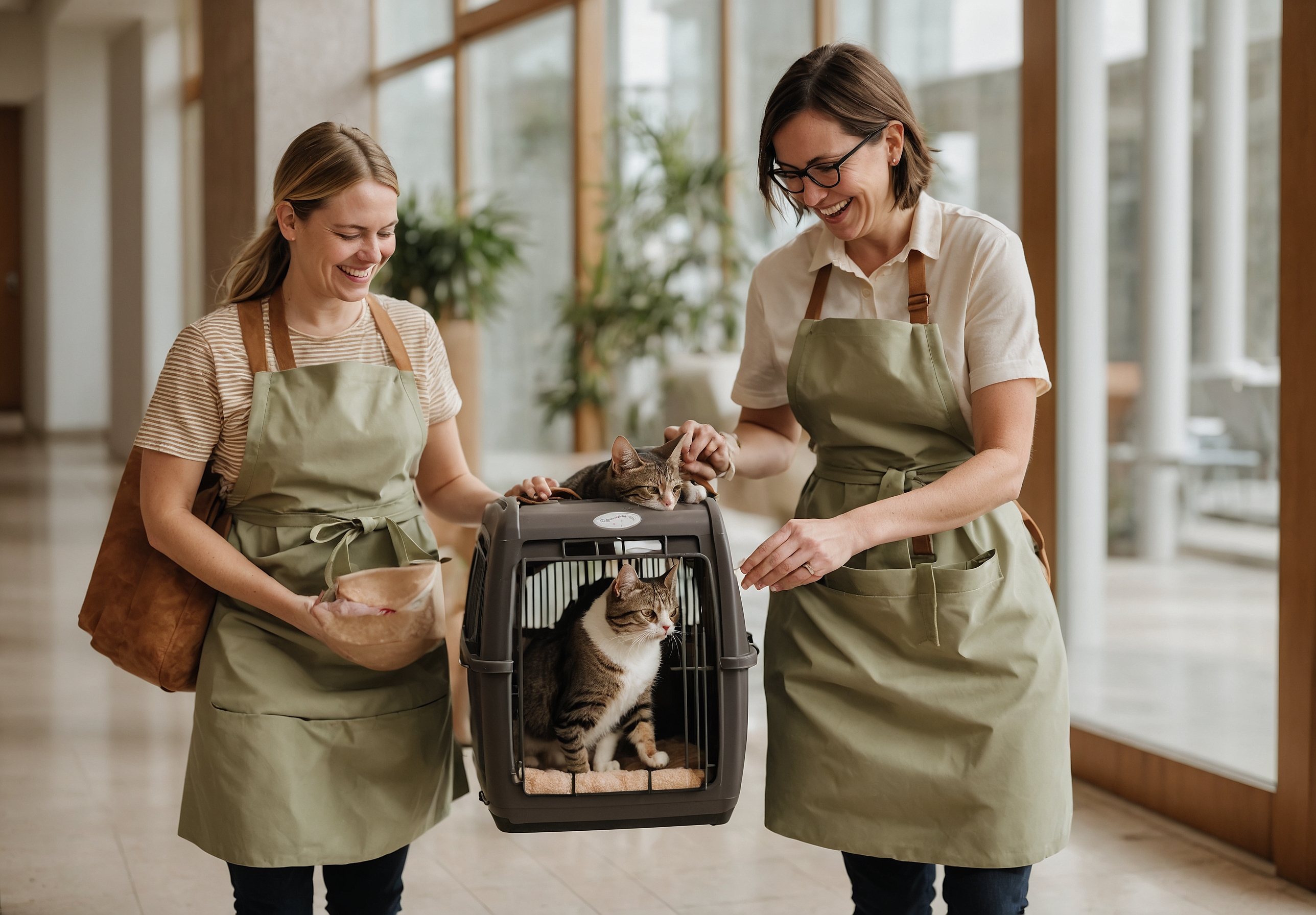
Watching the animal and the handover
Watch how your dog or cat reacts to the new person, not how the provider reacts to them. A dog that walks toward a stranger, or a cat that comes out to look, is telling you something. A dog that hides or a cat that stays under the bed is telling you something too, and a good provider will slow down rather than push.
Then watch the handover. Ask what they need from you in writing and what they will hand back. Ask for the rabies record. Florida law requires every dog, cat and ferret to be vaccinated from 4 months of age and revaccinated 12 months after the first shot, under Section 828.30 of the Florida Statutes, so a provider who never asks for the record is not paying attention to the one thing the county checks.
Ask a walker what they do about hot pavement. The American Kennel Club’s pavement check is a simple one: place your hand on the ground for ten seconds, and if it is too hot for your hand it is too hot for the dog’s paws. A walker who has never heard of it is not necessarily unsafe, but it is worth knowing before the first walk.
Ask for the current local business tax receipt as well. In a Miami-Dade municipality, a business needs that town’s receipt to operate, and the Town of Cutler Bay’s receipts run from October 1 to September 30. Ask what the liability policy excludes too. A surety-bond seller’s explainer notes that nearly all general liability policies carry a care, custody and control exclusion and do not cover theft, so read its framing as a vendor’s, but ask the question either way and ask for the certificate.
The signs an arrangement is not working
Take these in order, from the doorstep to the first week. None of them proves a provider is wrong on its own, but several of them together are a reason to stop before you pay.
- At the door: the provider talks about their schedule or prices before asking anything about your pet.
- In the room: they cannot say what they would do if the animal refused food or seemed unwell, or they promise something they have no way to check.
- At the handover: no records are asked for, and the key, the routine and the medication are described only in general terms.
- After the meeting: you get no written summary, and the price or the visit times shift from one message to the next.
- Before the first booking: the provider cannot show a current business tax receipt or a certificate of insurance when you ask for one.
Nothing on this page replaces asking the questions directly. If a provider answers them plainly, and puts the important answers in writing, the meeting has done its job, and the decision about who holds your key is yours to make.